
Technology
FRANCE KEREAUZEN will produce e-fuels from water, renewable electricity and locally captured CO2:
- e-kerosene, intended for air transport, will be mixed with traditional kerosene and used on current aircraft.
- e-naphtha will be sold to the plastics and oil industries wishing to decarbonize their activities in order to produce biosourced plastics.
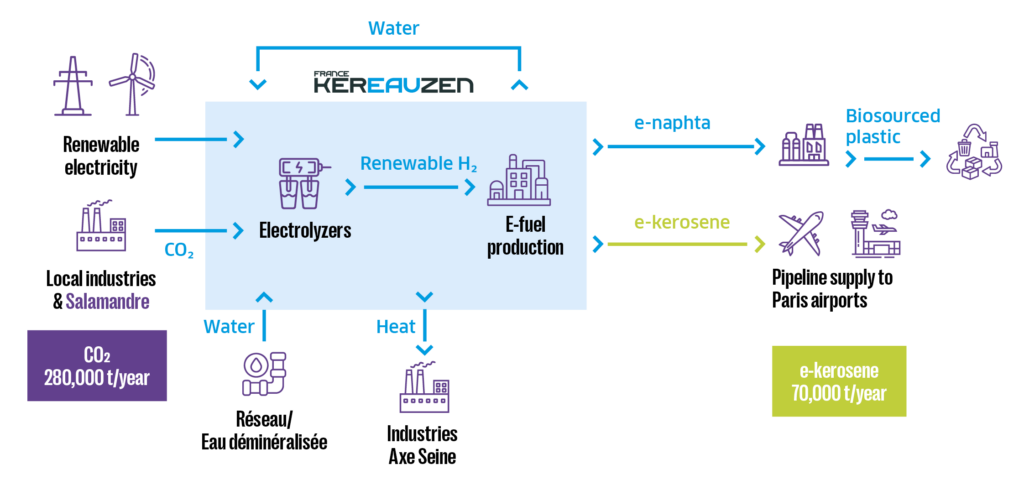
The project will also generate ca. 700 GWh of low-temperature heat, which will be used by local industries thanks to the connection to a heating network
How are e-fuels produced?
Converting CO₂ into synthetic kerosene requires mastering the integration of complex processes, from CO₂ conversion through to the final fuel, in particular:
– The rWGS (reverse water gas shift) reaction, a chemical reaction that uses part of the hydrogen produced by the project
– Fischer–Tropsch synthesis, which produces synthetic hydrocarbons
– Refining and hydrocracking steps, which in particular enable the fuel to meet aviation specifications before being delivered to airports
(schematic diagram below)
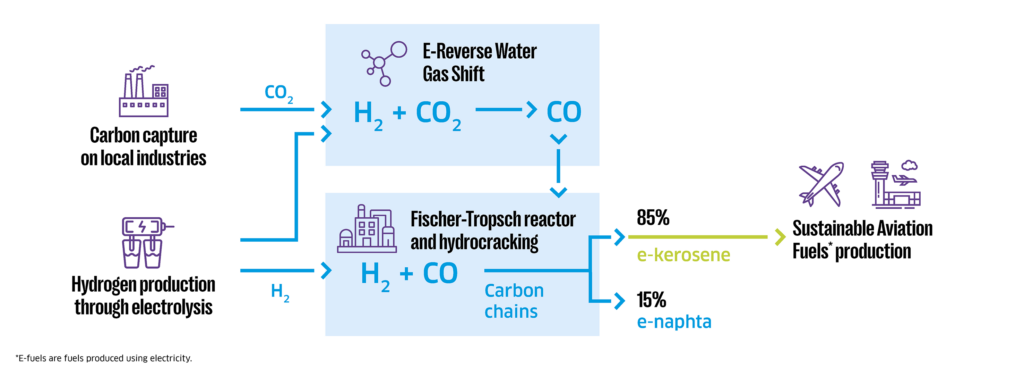
The process implemented is designed to maximize the production of sustainable aviation fuel.”
🤝 A partnership has been established with Shell Catalysts & Technologies to access to its power-to-liquids technology, which will enable the conversion of CO₂ into synthetic kerosene.
This will allow the project to rely both on proven industrial expertise in gas-to-liquids processes and on Shell Group’s operational excellence, which are essential to ensure industrial scale-up and to secure the plant’s performance.
✅ For an innovative project like France KerEAUzen, this partnership represents a real guarantee of robustness and technical credibility. It is a structuring milestone in turning a climate ambition into an industrial reality.
For more informations :